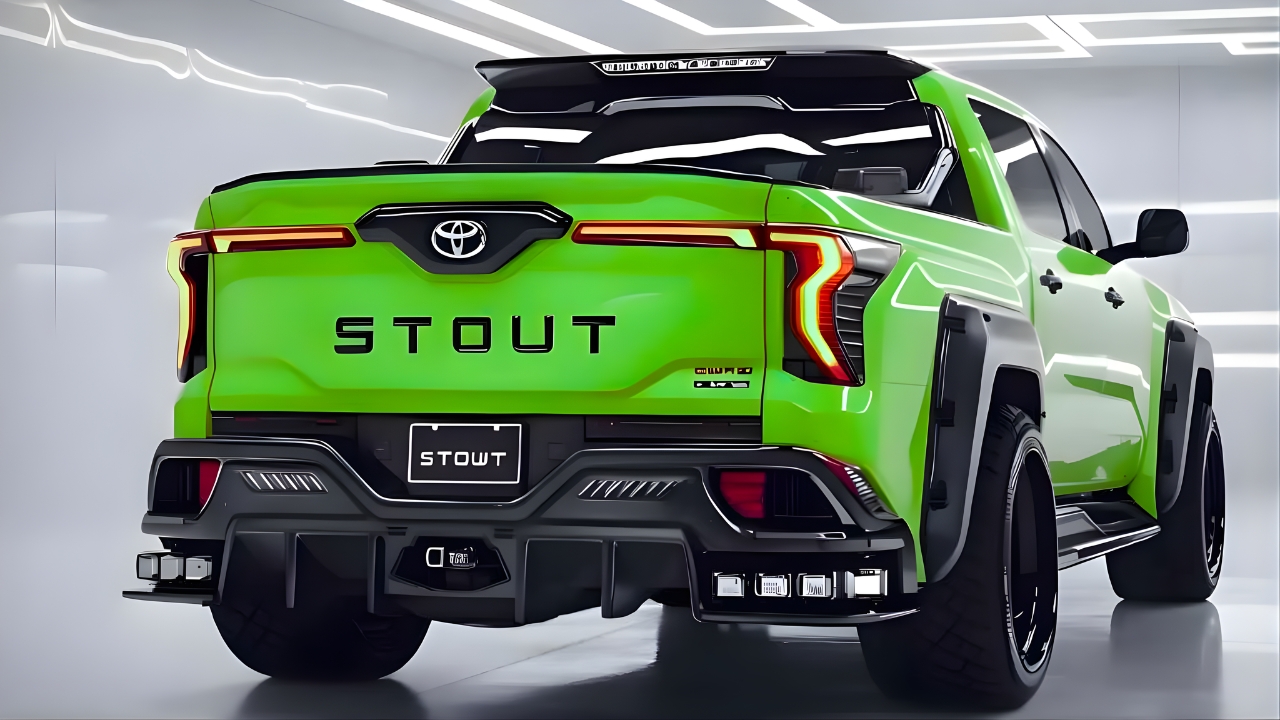
2026 Toyota Stout Revival: The compact pickup segment is heating up again, and Toyota appears ready to re-enter the conversation in a big way. The 2026 Toyota Stout Revival signals a return of a classic nameplate, but with a thoroughly modern twist. Once known as a practical workhorse decades ago, the Stout is now rumored to be reimagined as a smart, efficient, and urban-friendly pickup designed for today’s drivers.
With rising demand for smaller trucks that blend utility, efficiency, and everyday drivability, Toyota has an opportunity to fill an important gap in its lineup. Positioned below the larger Toyota Tacoma, the revived Stout could deliver compact dimensions, hybrid performance, and the latest technology in one well-balanced package.
A Legacy Reimagined for a New Generation
The original Stout built its reputation as a dependable small truck during the mid-20th century. Bringing the name back in 2026 would tap into that heritage while aligning with modern expectations. Unlike the rugged, body-on-frame trucks of the past, the new Stout is expected to adopt a more urban-focused design philosophy.
The 2026 model is likely to ride on a unibody platform, similar to what Toyota uses for crossovers. This approach would improve ride comfort, fuel efficiency, and handling while still offering practical hauling capabilities. For city dwellers and suburban homeowners who need occasional cargo space without the bulk of a midsize truck, this formula makes perfect sense.
Compact Size, Big Practicality
One of the most appealing aspects of the 2026 Toyota Stout Revival is its anticipated compact footprint. In an era where full-size trucks continue to grow larger, many drivers are looking for something easier to maneuver and park.
The Stout is expected to feature a manageable overall length and a shorter bed designed for lifestyle needs rather than heavy-duty job sites. Think bikes, home improvement supplies, camping gear, and small furniture hauls. A cleverly designed bed with integrated storage compartments, tie-down points, and possibly a multi-position tailgate could enhance everyday usability.
Inside, the cabin would likely reflect Toyota’s latest design language. Expect a clean layout, durable materials, and smart storage solutions. Even as a compact pickup, rear-seat space should comfortably accommodate adults, especially if Toyota opts for a crew cab-only configuration.

Hybrid Power for Modern Efficiency
Efficiency will likely be one of the Stout’s strongest selling points. Toyota has long been a leader in hybrid technology, and incorporating a hybrid powertrain into the 2026 Stout would align perfectly with current market trends.
A system similar to what’s found in the Toyota Corolla Cross Hybrid or Toyota RAV4 Hybrid could serve as the foundation. This setup would pair a fuel-efficient gasoline engine with electric motors to deliver smooth acceleration and impressive fuel economy. For urban commuters, the ability to maximize efficiency in stop-and-go traffic would be a major advantage.
Beyond fuel savings, hybrid power also offers responsive low-end torque. That instant electric assist could make the Stout feel surprisingly quick off the line while maintaining solid towing and payload capabilities for its class. While it may not rival the Toyota Tacoma in heavy-duty performance, it should comfortably handle small trailers, jet skis, or compact campers.
There is also the possibility of an all-wheel-drive variant using an electrified rear motor, providing extra traction without the weight of a traditional mechanical system. This would make the Stout appealing to drivers in regions with snow or light off-road needs.
Smart Technology Inside and Out
Modern buyers expect their vehicles to function as digital hubs, and the 2026 Toyota Stout Revival will likely meet those expectations. A large touchscreen infotainment system with wireless Apple CarPlay and Android Auto would be standard or widely available. Over-the-air software updates could keep the system current long after purchase.
Driver assistance technology will also play a significant role. Toyota Safety Sense, the brand’s suite of advanced safety features, would almost certainly come standard. Features such as adaptive cruise control, lane departure alert, blind-spot monitoring, and automatic emergency braking would help make the Stout one of the safest options in the compact truck category.
Connectivity may extend beyond the cabin. Remote start, vehicle tracking, and smartphone-based key functionality could enhance convenience. For a truck designed with modern lifestyles in mind, seamless integration with daily digital routines is essential.
Design That Balances Tough and Modern
Styling will be critical to the Stout’s success. Buyers want a truck that looks capable, even if it’s primarily used for commuting and weekend projects. Expect a bold front grille, squared-off wheel arches, and practical ground clearance that hints at capability without overdoing it.
LED lighting, aerodynamic touches, and two-tone color options could give the Stout a contemporary edge. The overall design would likely strike a balance between rugged charm and crossover-like sophistication.
Inside, comfort will matter just as much as durability. Supportive seats, intuitive controls, and available premium touches such as a digital instrument cluster or upgraded audio system could make higher trims feel surprisingly upscale.
Positioning in a Competitive Market
The compact pickup market is no longer an afterthought. With strong interest in smaller, more affordable trucks, Toyota’s timing could be ideal. The 2026 Toyota Stout Revival would likely target buyers who want utility without stepping into midsize pricing or fuel consumption levels.
Pricing will be crucial. If Toyota positions the Stout competitively, it could attract first-time truck buyers, young professionals, and even downsizing truck owners. Combining Toyota’s reputation for reliability with hybrid efficiency would make the package even more compelling.
The Stout would also complement the Toyota Tacoma rather than compete directly with it. While the Tacoma remains a go-to option for serious off-roaders and heavy-duty tasks, the Stout would focus on efficiency, maneuverability, and lifestyle versatility.
What This Revival Means for Toyota
Reviving the Stout name would demonstrate Toyota’s commitment to evolving with market demands. As consumers shift toward electrification and practical vehicle sizes, a compact hybrid pickup fits naturally within Toyota’s broader strategy.

The 2026 model could serve as a stepping stone toward even more electrified trucks in the future. It would showcase how hybrid systems can deliver both performance and efficiency in a utility-focused vehicle.
For many buyers, the appeal lies in balance. The Stout promises to combine manageable size, smart technology, and proven hybrid engineering into a single, well-rounded truck. If Toyota executes the concept thoughtfully, the Stout could quickly become a standout in the compact segment.
Disclaimer
The information in this article is based on industry speculation, early reports, and unofficial insights regarding the potential 2026 Toyota Stout Revival. Toyota has not officially confirmed full specifications, features, pricing, or release details. Final production models may differ in design, performance, and technology from what is described above.
